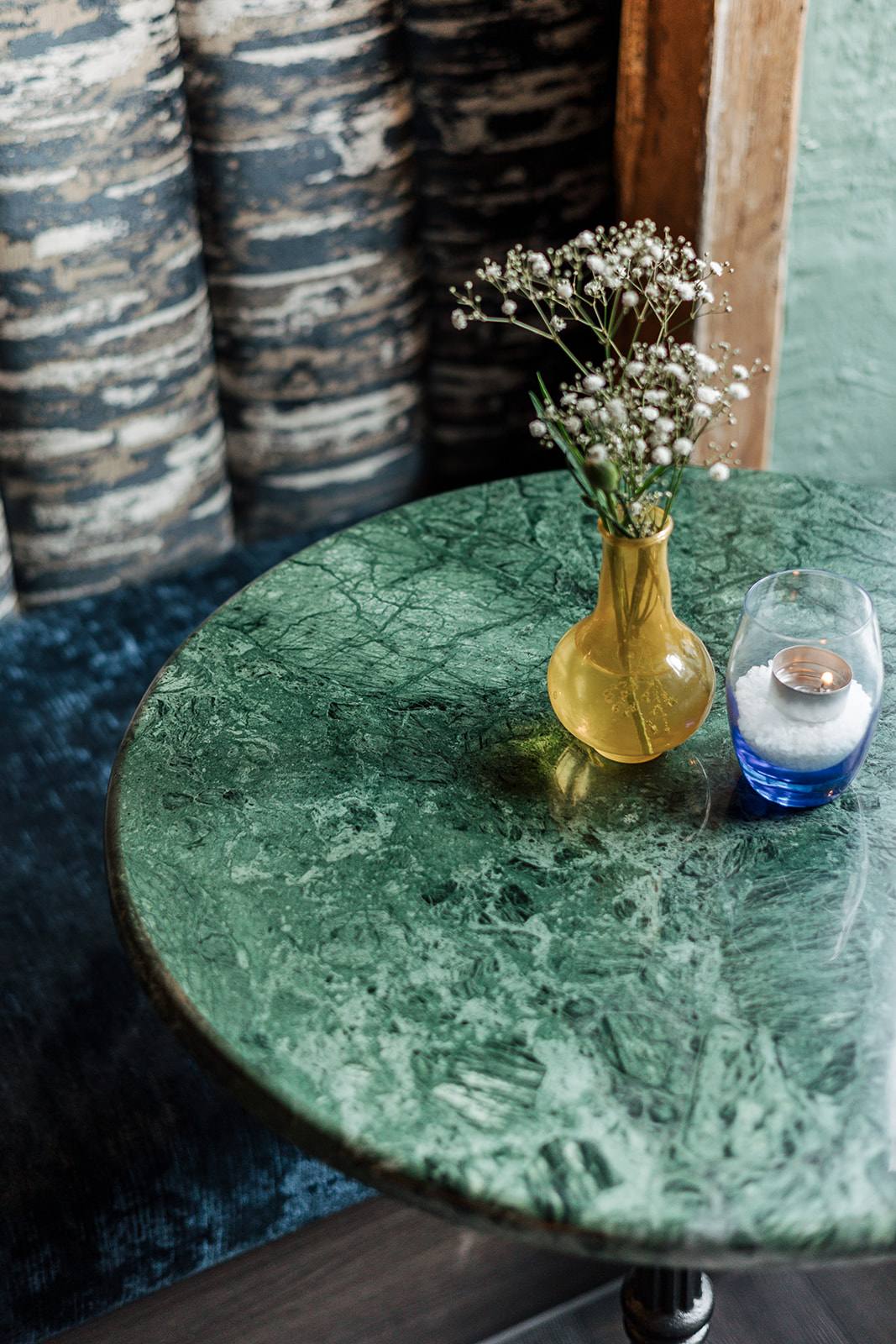
Hospitality interiors fail not because they’re badly designed, but because materials and finishes were chosen without understanding how the space will actually be used. The studio specifies durable hospitality environments by beginning with use patterns during Discovery, then selecting materials during Concept, Design & Specification that withstand high traffic, spill, heat and cleaning cycles over a decade or more—avoiding the choice between cosmetic refresh every three years or a full rebuild.
Why material failure happens in hospitality—and how it differs from residential design
A pub stool gets sat on 500 times a week. A restaurant wall behind a pass gets splashed with fat and heat every service. A hotel headboard receives a decade of impact from guest movement and cleaning protocols. These aren’t edge cases—they’re the normal operating environment. Residential interiors assume gentle, mindful use; hospitality interiors must assume continuous mechanical stress, temperature swings, moisture, and chemical exposure. When a designer specifies residential-grade materials into a hospitality setting, failure is predictable: veneers delaminate, paint chips, upholstery threads separate, and finishes dull under cleaning compounds. The cost isn’t just replacement—it’s the closure of a revenue-generating space.
The studio has worked across The Starr Pub, The Funky Monk Boutique Hotel, The William Boosey, The Axe and Compasses, and multiple restaurant environments where the specification challenge is identical: specify once, maintain with confidence for ten years. This requires a fundamental shift in how materials are evaluated. Durability isn’t a nice-to-have—it’s the primary performance criterion, sitting above aesthetics and cost in the hierarchy of decision-making.
What does the Discovery phase reveal about a space's actual use patterns?
Before any material is selected, the studio must understand the real mechanics of the space. During Discovery, this means walking the site at different times—service hours in a restaurant, closing procedures in a pub, guest turnover in a hotel—and recording what actually happens to surfaces. How many staff move through the corridor daily? Which walls get leaned on? Where does spillage concentrate? What cleaning products are used, and how often? What temperature and humidity swings occur between service and closing? A boutique hotel corridor sees luggage wheels, damp coats, and wet feet from en-suite showers. A pub counter sees elbows, spilled liquid, and the abrasion of bar towels. A restaurant pass wall sees high heat, grease, and aggressive daily cleaning. These patterns are non-negotiable—they determine which materials will survive and which will fail, regardless of budget.
Which materials reliably withstand hospitality wear, and why
Durable hospitality interiors are built from material families that have proven performance records under sustained mechanical and chemical stress. Hard surfaces—polished concrete, natural stone with sealed finishes, commercial-grade porcelain tile, and engineered wood with industrial-strength top coats—outperform soft finishes in high-traffic zones. These materials don’t hide wear; they age visibly but don’t fail catastrophically. A sealed concrete floor shows patina; it doesn’t chip or splinter. Polished stone accepts the occasional mark; it doesn’t crack under normal use.
For soft goods—upholstery, curtains, acoustic panels—the studio specifies performance textiles engineered for contract hospitality use: fabrics with mechanical abrasion ratings above 100,000 Martindale cycles (standard residential is 15,000–30,000), inherent stain resistance, and flame ratings that meet UK hospitality fire codes without chemical topcoats that degrade with cleaning. On The Starr Pub and The Funky Monk Restaurant, seating and banquette upholstery uses high-performance yarns that resist pilling, fading, and liquid absorption—materials that don’t require replacement when a guest spills wine, only prompt blotting. Paint and wall finishes must be commercial-grade lacquers or polyurethane enamels—not emulsion—because they accept abrasion and moisture without breakdown. Behind service areas and in kitchens, tadelakt or sealed plaster finishes offer hygiene and easy cleaning without the cold institutional feel of tiled walls.
How does finish specification prevent the cycle of early failure and costly refresh?
The finish—the protective layer applied to a material—is where most hospitality specifications go wrong. A beautiful walnut counter needs a finish rated for contact with hot plates, cutlery, and citric-acid-based cleaning products. If that finish is a matte oil, it will stain and degrade within months. If it’s a properly specified industrial polyurethane or epoxy, the same walnut will accept minor scratches without deep damage, and daily cleaning won’t break down the protection. The difference isn’t visible—both look attractive—but the performance outcome is a decade of durability versus a two-year descent into cosmetic failure. During Concept, Design & Specification, the studio builds finish specifications from the use case backward: the finish must match the chemical and mechanical stress the surface will encounter, not the aesthetic preference for matt or gloss. A hospitality finish typically includes primer, base coat, and top coat—each chosen for adhesion, flexibility, and resistance to the specific abuse the surface will receive. This redundancy means that minor damage doesn’t cascade into material failure.
Why 'designed for refresh' beats 'designed for permanence'
The most durable hospitality interiors aren’t those that hide every mark—they’re those designed to age visibly but accept periodic, non-invasive refresh. A pub or restaurant typically needs cosmetic refresh every five to seven years: new upholstery, repainting, updated lighting. If the core materials—flooring, structural finishes, built-in fixtures—are specified to survive this cycle without deterioration, the cost of refresh is labour and soft goods only. If core materials are cheap and start to fail after three years, the refresh becomes emergency rebuild. The Starr Pub’s Hardware Bar was specified with this principle: durable base materials that age gracefully, paired with easy-to-replace accent pieces (seating, paint, lighting) that can be refreshed without disrupting the integrity of the interior. This approach acknowledges the commercial reality: hospitality spaces don’t stay static, but they shouldn’t require structural rescue before the business model allows it.
What questions should be asked during Concept, Design & Specification to lock in durability?
When working with a designer or specifier on a hospitality interior, the right questions expose whether durability is genuinely embedded in the specification. Ask: what is the mechanical wear rating of this fabric or finish, and what standard was it tested to? What happens to this material when cleaned with the actual products your staff will use—not theoretical ones? Has this finish been used in similar hospitality environments, and how has it performed? Where is wear most likely to concentrate, and is that material rated for that specific stress? Can this surface be patched or repaired without visible mismatch, or does any damage require full replacement? Can soft goods be reupholstered without replacing the frame, or is the whole piece disposable? These questions aren’t contentious—they’re the substance of responsible specification. A designer who can answer them has done the Discovery and Concept work properly. A designer who offers only aesthetic assurances has skipped the research that prevents failure.