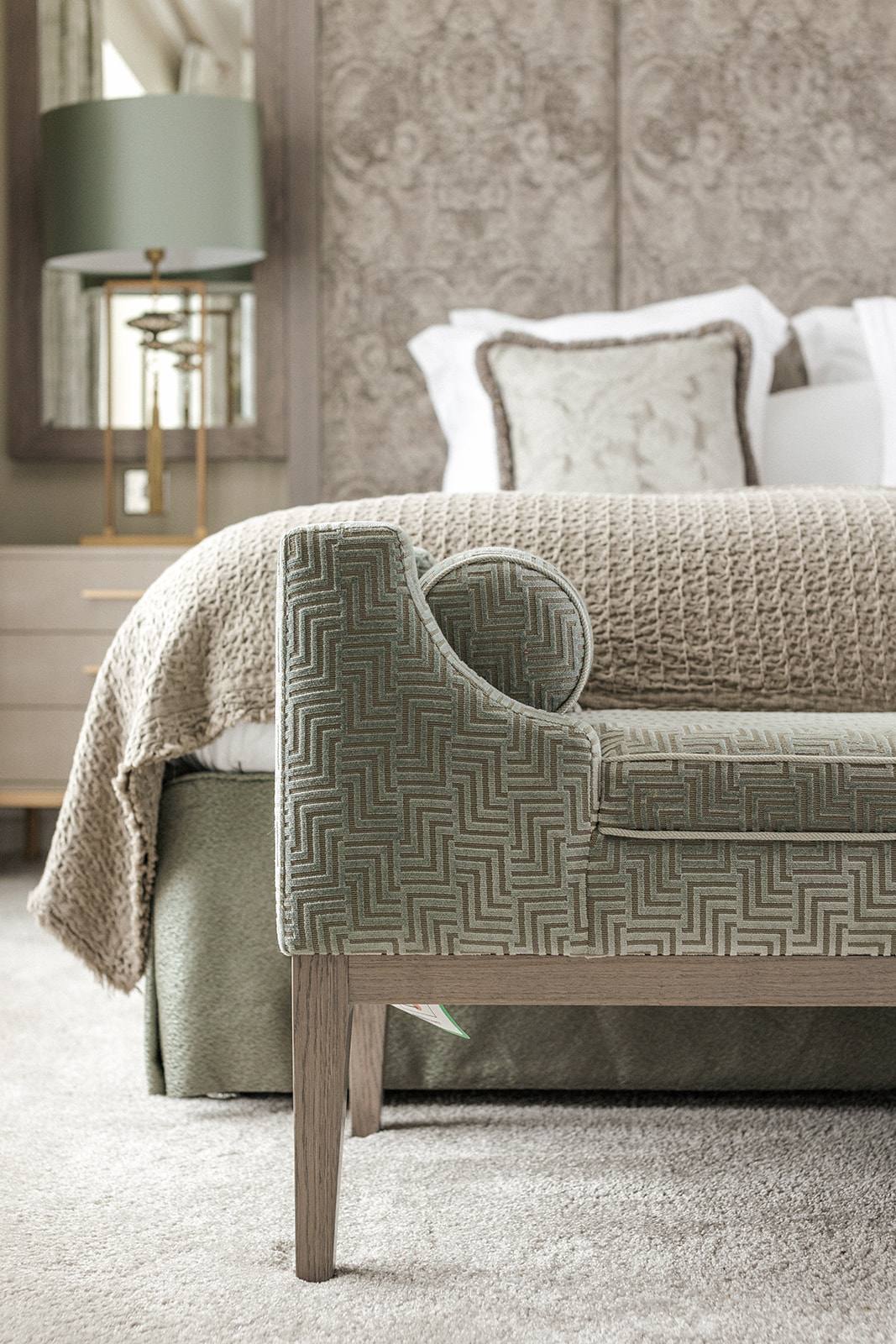
Sustainable interior design rests on five core principles: choosing materials and finishes built to last, specifying with restraint to reduce waste, selecting honest & durable materials over trend-led alternatives, designing for permanence rather than seasonal fashion, and commissioning quality craft that ages well. These principles guide every stage of the design process, from Discovery through Reveal, ensuring interiors remain functional and beautiful for decades rather than seasons.
1. Material longevity: build interiors that last
Sustainable design begins with the choice of what stays in the space longest. Load-bearing elements—structural joinery, upholstered frames, flooring, and wall finishes—must be selected for durability, not novelty. A reupholstered sofa keeps its original frame; a timber floor is specified for wear class and repairability; plasterwork is finished to a standard that tolerates years of use without cosmetic failure. This principle appears in every commercial project the studio undertakes. At Beaulieu Dental Practice, hard-wearing materials were selected for clinical environments where hygiene demands frequent cleaning and contact. At Tone at Canary Wharf, the specification prioritised finishes that would perform under high foot traffic and regular maintenance without degradation.
Material longevity is not about choosing the most expensive option—it is about understanding what a material is designed to do, and whether it will continue to do that job for the lifespan of the interior. Natural materials often age better than synthetic alternatives because their performance is predictable and well-documented. Solid wood darkens and patinas; natural stone develops character. These are not failures; they are evidence of use. Specifying materials with this understanding means the interior does not require wholesale replacement when trends shift or surfaces show age.
2. Restraint in specification: design with what is necessary, not surplus
Reduction of waste begins before any material enters the space. During Concept, Design & Specification, the studio specifies only what the interior genuinely requires to function and be beautiful. This is not minimalism for its own sake—it is the discipline of asking whether every element earns its place. Unnecessary finishes, redundant layers, and speculative materials inflate cost, complexity, and environmental impact without improving the interior's performance or aesthetic.
At Keystones Estate Agent, the specification was stripped to essentials: the surfaces that carry use, the storage that provides function, the finishes that define character. Nothing surplus was added. This restraint made the interior clearer, more durable, and more sustainable than a specification that included decorative layers or fashion-led details. In residential work—the Witham Project and London Embankment Apartment both demonstrate this principle—restraint in specification meant each chosen element had genuine purpose, whether structural, functional, or aesthetic. The result is an interior that does not require constant updating or replacement of non-essential elements.
3. Honest material specification: choose materials for what they are, not what they imitate
Sustainable design avoids materials specified to imitate something else. Vinyl that mimics timber, composite that apes stone, or synthetic finishes designed to simulate natural wear are all choices that eventually reveal their inauthenticity—and then require replacement. Honest specification means choosing the real material if durability matters, or choosing a synthetic material for what it genuinely is and accepting its own aesthetic and performance characteristics.
This principle shapes the Commission stage at every project. Fruittii Hair Salon required finishes that would withstand daily use, moisture, and chemical exposure. The specification named real materials—not imitations—because their performance characteristics were known and verifiable. When a finish is honestly specified, its durability is transparent, maintenance is predictable, and replacement (if ever needed) is straightforward. Dishonest specification—materials masquerading as something they are not—leads to premature failure, surprise maintenance, and the environmental cost of replacement sooner than the interior's actual lifespan should require.
4. Timeless design: permanence matters more than trend
Trend-led interior design guarantees obsolescence. A space designed around current colour palettes, material fashions, or stylistic movements will feel dated within five to seven years, driving the impulse to refurbish, replace, and discard. Sustainable design rejects this timeline. Instead, it prioritises aesthetics and proportions that are not anchored to a specific moment, allowing the interior to age naturally and remain functional and beautiful without major intervention.
Timelessness is built during Discovery and Concept. The studio develops a spatial strategy and aesthetic language that reflect the interior's genuine purpose and the user's authentic needs, rather than curated mood boards or seasonal trends. At London Embankment Apartment, the design established a quiet, restrained palette and proportional discipline that will serve the space well beyond the next ten years without feeling fashion-bound to the present day. Timeless interiors do age—they develop patina, show use, and change—but they do not become embarrassing or obsolete. This is the sustainability of permanence: an interior that remains inhabitable and beautiful for its intended life without requiring cosmetic overhaul driven by expired trends.
5. Quality craft: invest in construction that performs
The final principle is execution. A beautifully specified interior built to poor standards will fail prematurely, wasting the environmental investment already made in material selection and design. Quality craft—careful joinery, proper installation, attention to detail in finishing—ensures that the interior performs as designed and lasts as long as the materials themselves should. This is why the Commission and Reveal stages are not afterthoughts; they are where the specification is either realised or compromised.
Quality craft is inseparable from material longevity. A timber floor will last decades only if it is properly acclimated, correctly fitted, and sealed to specification. Plasterwork will age beautifully only if it is built to appropriate thickness and finished with care. Joinery will remain functional only if joints are tight, fixings are hidden, and construction methods respect the material's properties. Across all the studio's projects—commercial and residential—this principle governs the relationship with makers and installers. The cost of quality craft is always lower than the cost of replacing a poorly executed interior halfway through its intended lifespan.
How these principles work together in practice
These five principles are not separate: they reinforce each other. Material longevity is impossible without honest specification. Timeless design is wasted if built without quality craft. Restraint in specification ensures that every material chosen really does need to last. During Discovery and Concept, the studio tests every decision against these principles: Does this material genuinely last? Is this specification necessary? Does it honestly represent what it is? Will this aesthetic feel authentic in ten years? Is the execution capable of realising the specification?
The studio’s portfolio—Beaulieu Dental Practice, Fruittii Hair Salon, Keystones Estate Agent, London Embankment Apartment, Tone at Canary Wharf, and the Witham Project—demonstrates that these principles produce interiors that perform, age well, and require no replacement or major intervention beyond normal maintenance. They are sustainable not because they use fashionable ‘eco’ materials, but because they are designed and built to last, specified with discipline, and executed with care. That is the only genuine measure of sustainability in interior design.