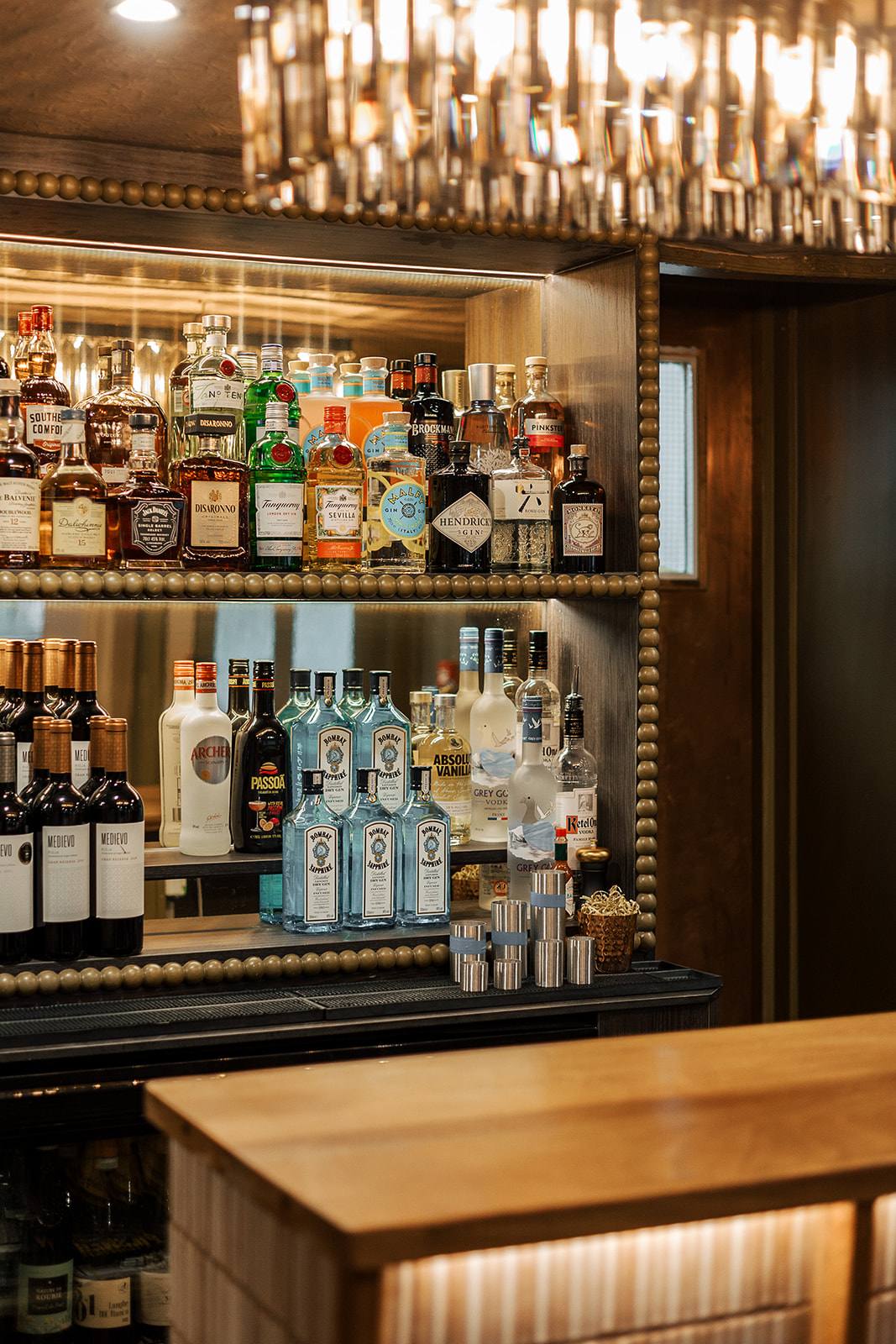
A hospitality interior designer creates functional, considered environments for commercial spaces—hotels, restaurants, dental practices, salons, estate agents—where the interior must serve both operational needs and guest or client experience. Unlike residential design, hospitality work balances aesthetic intent with the practical demands of heavy use, staff workflows, and measurable business outcomes. The discipline demands restraint: every material choice, spatial decision and finish must justify itself through durability, clarity of purpose, and the permanence of the result.
Where does hospitality interior design happen?
Hospitality interior design applies to any commercial environment where clients or guests spend time—and where the quality of that environment shapes their perception and behaviour. This includes dental and medical practices (Beaulieu Dental Practice), hair salons (Fruittii Hair Salon), estate agent offices (Keystones Estate Agent), and hospitality venues like bars and restaurants (Tone at Canary Wharf). Each sector presents distinct constraints: a dental practice must project calm and clinical competence; a salon requires energy and confidence; an estate agent’s space must build trust and showcase properties effectively. The interior is not decoration—it is infrastructure for the business itself.
The scope of hospitality design extends beyond aesthetics into the practical architecture of how a space functions. Staff need clear workflows. Clients need to feel oriented and valued. The space must withstand daily wear without losing its intent. A reupholstered chair keeps its frame; a specified paint finish must perform across hundreds of client interactions. This is why hospitality interiors often outlast trends—they are built to last because they are built to work.
How does a hospitality interior designer approach a project differently?
The hospitality interior designer works within the studio’s process: Discovery, Concept, Concept, Design & Specification, Commission, and Reveal. Discovery means understanding not just the aesthetic ambition but the operational reality—staff numbers, peak hours, cleaning schedules, material replacement costs, building regulations compliance. A salon designer must know how many clients pass through daily and where the queue waits. A dental practice designer must understand infection control routes and patient anxiety points. This research phase determines everything that follows.
In Concept, Design & Specification, the designer makes choices that prioritise longevity and function over novelty. Materials are selected for their performance under use, not their current fashionability. A hospitality space uses finishes that are cleanable, durable, and honest about what they are. Colour is used sparingly to create clarity and atmosphere rather than visual complexity. Lighting is designed for both task and mood—staff must see to work; guests must feel welcomed. This restraint is not minimalism for its own sake; it is the discipline of making every element earn its cost and its visual weight.
What is the relationship between hospitality design and residential design?
Residential and hospitality design share foundational skills—spatial planning, material knowledge, lighting design—but they serve opposite masters. A residential interior (such as London Embankment Apartment or Witham Project) is designed for a single household’s long-term inhabitation. The designer can make deeply personal choices because the client will live with them for years. A hospitality interior serves dozens, hundreds, or thousands of people over its lifespan. Personal preference gives way to clarity, durability, and the efficient orchestration of use.
This does not mean hospitality interiors are cold or impersonal. Rather, they communicate through restraint and legibility. The interior tells the client or guest what the business is, how to behave within it, and what to expect. A dental practice interior communicates competence and calm through its material choices and spatial clarity, not through personal decoration. A salon interior projects energy and craft through considered colour, lighting, and the honest display of tools and materials. The permanence of a well-designed hospitality space often outlasts the residential interiors around it because its purpose is clearer and its construction more rigorous.
Why does a hospitality space need a designer rather than a decorator?
The difference centres on decision-making rigour. A decorator selects finishes and furnishings. A hospitality interior designer specifies every element—materials, dimensions, performance standards, installation methods—because the space must perform under defined conditions. When Tone at Canary Wharf was designed, every surface was chosen for its behaviour under hospitality use: sound absorption, ease of cleaning, durability under heat and moisture, and how it contributes to the guest experience. These are not aesthetic preferences; they are operational requirements that look like aesthetic choices.
A hospitality designer also holds accountability for the brief beyond the opening. Beaulieu Dental Practice and Fruittii Hair Salon were designed to function without constant redesign or adjustment. The interior tells staff and clients how to use the space. Wayfinding is intuitive. Materials age predictably. Maintenance is straightforward. This is invisible competence—the mark of design that works is that nobody comments on how well it works; they simply use the space as intended. This depth of planning, specification, and foresight separates hospitality design from decoration.
When should a business commission a hospitality interior designer?
The right time is when a business recognises that the interior is inseparable from the service or product it offers. A dental practice is not just the clinical equipment; it is the calm, professional environment that makes treatment bearable. A salon is not just the stylists; it is the space that makes clients feel valued and capable. An estate agent’s office is not just the staff; it is the setting where properties are imagined and transactions begin. When the interior shapes client behaviour or perception, it demands deliberate design, not default specification.
Early commissioning, during Discovery, yields the best outcomes. Designers working upstream can influence spatial planning, building configuration, and material selections before constraints harden into cost or logistics problems. Late commissioning, after construction or lease, forces design to work within fixed parameters. The studio process works best when it informs strategy, not when it finishes it. If you are opening a new practice, relocating, or refreshing a space that no longer serves its purpose, the time to commission a designer is when you are ready to ask not what the space looks like, but what it needs to do.
How do you evaluate whether a hospitality designer is right for your project?
Review completed work in your sector or a closely analogous one. Does the portfolio show durability and clarity of purpose, or trend-led decoration? Can you understand how each space functions, not just how it looks? Beaulieu Dental Practice, Fruittii Hair Salon, and Keystones Estate Agent are three different sectors with distinct briefs, yet each interior solves its own problem with restraint and specificity. A strong hospitality portfolio shows this kind of sector-specific thinking, not a house style applied everywhere.
Ask about process transparency. Does the designer explain their specification choices and the reasoning behind material selections? Can they articulate the difference between what looks good and what works under use? The studio’s approach—Discovery, Concept, Concept, Design & Specification, Commission, and Reveal—provides a framework you can evaluate: a designer who can walk you through these stages, and explain what happens in each, is likely to deliver thinking rather than decoration. Trust is built through evidence of past work and clarity of process, not through marketing rhetoric or trend awareness.