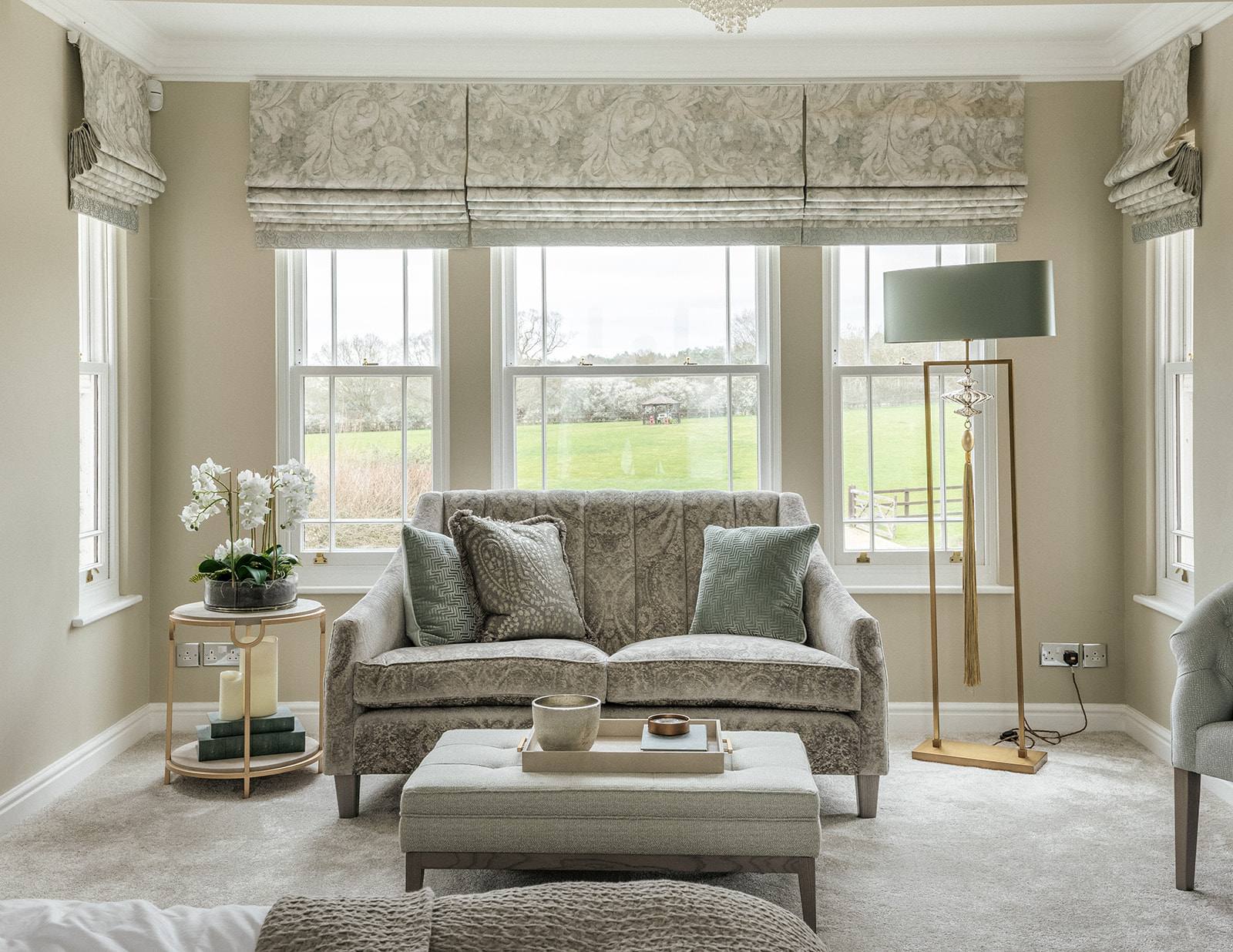
Art Deco interiors use geometric forms, symmetry, and rich materials—brass, lacquer, marble, timber—to create a composed, purposeful aesthetic. Rather than ornament for its own sake, Art Deco restraint demands every element earn its place through proportion and craft. The style works because it honours both function and beauty without conflict.
What defines Art Deco as a design language?
Art Deco emerged in the 1920s as a reaction to ornamental excess. Unlike Art Nouveau’s flowing curves, Art Deco favours geometric precision: chevrons, sunbursts, stepped forms, and rectilinear shapes dominate. Symmetry is fundamental. A properly composed Art Deco interior feels balanced because every surface—wall panelling, fireplace surround, built-in joinery—obeys geometric logic. This is not minimalism; it is maximalism held in check by discipline.
The palette centres on contrast: black lacquer against cream, polished brass against walnut veneer, pale marble against dark timber. Metallic finishes—chromium, nickel, bronze—catch light and create visual movement without introducing fuss. Materials matter absolutely. An Art Deco interior uses real materials: quarter-sawn oak, ebonised wood, genuine marble, hand-applied lacquer. Substitution betrays the style's core principle: that craft and permanence are inseparable from beauty.
How does an interior designer identify Art Deco in a residential space?
In a residential project, Art Deco announces itself through built-in furniture and fixed joinery rather than loose pieces. Fitted wardrobes with stepped cornicing, geometric inlay, and lacquered veneers are characteristic. Fireplace surrounds in marble or timber with linear detailing, mirrored panels set in geometric frames, and wall panelling in contrasting materials all signal the style. The Concept, Design & Specification phase of a residential project will expose whether the existing architecture—or planned renovation—can accommodate these defining elements without awkwardness.
Flooring often features geometric patterns: chevron parquet, marble with inlaid brass strips, or contrasting timber borders that frame the room. Windows are dressed simply—often with plain linen or silk—so that the geometry of the building itself, and the joinery, remains the focus. Lighting fixtures in chrome or patinated brass, with shades in frosted glass or silk, complement without competing. In a space like the London Embankment Apartment or the Witham Project, this discipline is visible: every surface serves the geometric order, nothing is arbitrary.
How does Art Deco work in commercial interiors?
Commercial spaces benefit from Art Deco’s inherent formality and legibility. Reception areas, salons, and professional practices gain authority from the style’s symmetry and material richness. The Fruittii Hair Salon and Tone at Canary Wharf both demonstrate how Art Deco principles—geometric layout, material contrast, and restrained colour—create an interior that feels considered and confident without descending into pastiche or nostalgia.
In a salon or practice, Art Deco joinery defines zones. A reception desk with stepped detailing and polished surfaces establishes the threshold. Mirrored panels and chrome-framed elements expand visual space while maintaining the geometric language. Flooring—often geometric tile or inlaid timber—reinforces the order. Colour palettes remain tight: cream, grey, black, with accents in brass or bronze. This restraint ensures the interior serves its function; the design never overwhelms the client’s experience of the service.
What is the difference between Art Deco and imitating the era?
A common mistake is treating Art Deco as a period costume—sourcing reproduction furniture, adding 1920s props, and calling the space finished. True Art Deco is a design discipline, not a theme. The style works when every decision is justified by proportion, material, and function. A reupholstered sofa in a geometric velvet placed against a plain wall reads as Art Deco only if the sofa’s form and proportions align with the style’s geometry. A room filled with loose Art Deco-inspired objects feels incoherent; a room where walls, joinery, flooring, and fixtures all obey the same geometric and material logic feels inevitable.
During the Discovery and Concept phases, a designer working with Art Deco must establish whether the client’s brief supports the style’s inherent formality and permanence. Art Deco demands investment in bespoke joinery, quality materials, and skilled execution. It is not a style that tolerates compromise on craft or substitution of materials. The Keystones Estate Agent, Beaulieu Dental Practice, and Tone at Canary Wharf all succeeded because the commercial brief—establishing professional authority, creating a composed threshold, defining clear zones—aligned perfectly with the style’s strengths.
How does an interior designer specify Art Deco materials and finishes?
Specification is where Art Deco lives or fails. During the Concept, Design & Specification phase, every material is named precisely. Timber is identified by grain and finish: quarter-sawn oak with a matte lacquer, or walnut veneer with a satin sheen. Metals are specified by alloy and patina: brushed brass, chromium plate, or oil-rubbed bronze. Marble is chosen not only for colour but for vein pattern—a geometric vein structure complements the style’s linearity better than soft, amorphous patterns. Lacquer is applied by hand in multiple coats; it is not a paint substitute.
Glass is often bevelled, mirrored, or frosted—never plain. Upholstery fabrics are wool, linen, silk, or velvet in solid colours or tight geometric weaves; printed florals or organic patterns undermine the style’s geometry. Hardware—handles, hinges, escutcheons—is chosen from the material palette and proportioned to the geometry of the joinery it serves. In the Commission and Reveal phases, this specification becomes tangible. The craftspeople executing the work—joinery makers, painters, upholsterers—receive a specification so clear that ambiguity vanishes. The finished interior reflects the precision of the specification.
Why does Art Deco remain relevant in contemporary interiors?
Art Deco endures because it solves real design problems. Its emphasis on geometric order creates visual calm. Its material richness—without clutter—satisfies the desire for quality and permanence. It works equally in a London apartment, a commercial salon, or a professional practice because the principles are universal: proportion, symmetry, craft, and restraint. Contemporary interiors often suffer from visual noise; Art Deco’s discipline offers a corrective.
The style also aligns with how people now commission interiors. Fewer clients want trend-led, fast-moving aesthetics. More seek spaces that feel considered, that age with grace, and that require investment in quality materials and skilled making. Art Deco’s insistence on permanence—that the interior should last, that materials should be real, that craft should be visible in the proportions and joints—speaks directly to this shift. An Art Deco interior is not a stage set; it is a structure, built to be inhabited for decades.