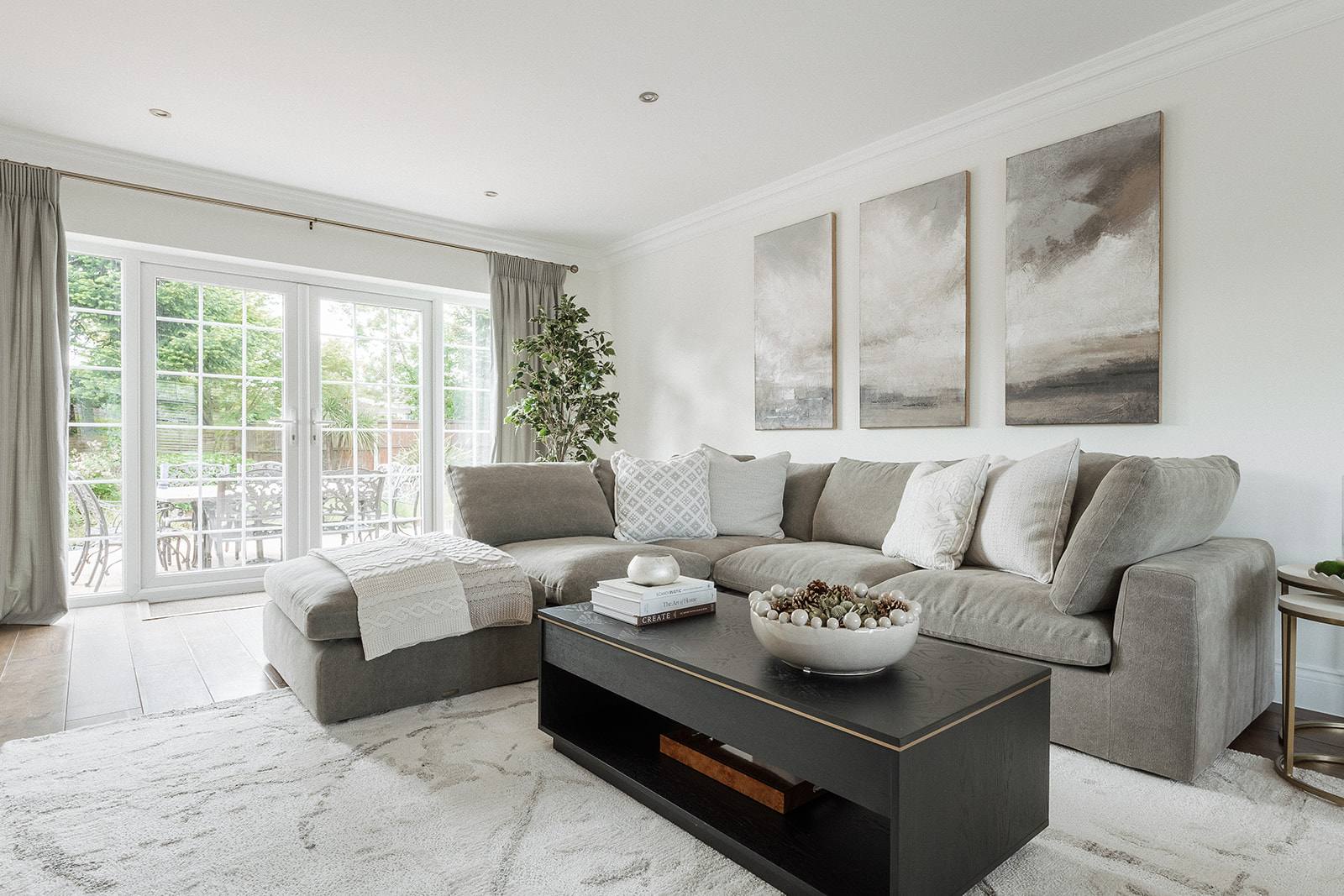
WITHAM, ESSEX
Interior Design for Witham Homes
Witham’s housing stock—from Victorian terraces to interwar semis and contemporary conversions—demands interiors that respect their character without pastiche. We work within these constraints as evidence of restraint.
Witham is a town where architectural coherence still matters. The conservation area around Church Street holds the town’s Victorian and Edwardian identity, while the surrounding residential streets contain a genuine mix of period stock, each generation adding its own layer without wholesale erasure. This is not London; it is a place where a homeowner’s interior choices carry weight because they are visible and accountable to the streetscape and neighbourhood context. When we begin work on a Witham home, we start with Discovery—understanding not just the client’s vision, but the building’s existing bones, its proportions, the quality of light at different times of day, and what the space already knows how to do. This is where restraint begins: not as aesthetic fashion, but as honest observation.
The railway connection to London, the proximity to the Blackwater valley, and Witham’s role as a secondary market town have attracted a particular kind of resident over the past two decades—people who value stability, good schools, and a sense of place without the metropolitan premium. They tend to occupy homes longer, invest more carefully in their interiors, and seek substance over novelty. This clientele shapes how we approach every project. They do not want to be sold a trend; they want a home that will endure and improve with time. Our process reflects this: Discovery leads into Concept, where we articulate the spatial narrative and material language that will guide the work. The Concept phase is never about mood boards or Instagram-ready renders. It is about identifying the genuine constraints and opportunities unique to that address.
Witham homes typically feature generous room proportions inherited from their period of construction. A Victorian terrace offers high ceilings and deep sills; an interwar semi gives you a bay window and a defined hallway sequence. Rather than working against these inherited strengths, our Concept, Design & Specification phase treats them as given. We specify materials, joinery, and finishes that allow these proportions to speak. In the Witham Project, a residential interior in the town, the approach was to anchor the living spaces with solid oak joinery that sat comfortably within the room’s existing cornicing and chimney breast. The outcome was neither nostalgic nor contradictory—simply a home where the new interventions deferred to the existing architecture rather than competing with it. This is the difference between design that respects context and design that surrenders to it.
The specification phase is where competence becomes visible. We do not use digital renderings to flatten the decision-making process into a single, seductive image. Instead, we present material samples in situ, finishes on the actual walls, and joinery details drawn at full scale where they matter. Clients see the thickness of a door frame, the exact tone of a paint colour under their own light, the weight of a linen fabric before it is sewn. This transparency takes longer than a slick presentation deck, but it builds the foundation for a Reveal that feels inevitable rather than surprising. In the Witham Interior, a residential project completed last year, the specification included three site visits purely to confirm material choices under different weather and light conditions. This is not excessive; it is the cost of certainty.
Witham’s demographic and property market are instructive for understanding what interior design should accomplish. The town is not aspirational in the manner of commuter belts closer to London. People live here because they choose to—because the schools are sound, the high street has substance, and there is a discernible community. These homes are not staging grounds for the next move; they are places to be inhabited fully. Our projects in Witham reflect this stability. The Witham Bedroom is a case study in restraint: a residential space where the intervention was limited to bespoke joinery, a carefully chosen plaster finish, and the removal of unnecessary visual clutter. The result is a room that serves its function without announcing itself. This is not minimalism as aesthetic statement; it is minimalism as honest assessment of what the space needs.
Conservation constraints exist in Witham, and they are not obstacles to design but rather clarifying parameters. If a property falls within or adjacent to a conservation area, the local planning framework requires that certain external features remain unchanged—windows, rooflines, material finishes. Internally, this means that your interior must achieve its character and function without relying on alteration to the building’s external expression. This is a valuable discipline. It forces the designer to think about depth rather than surface, about how light moves through a room, about the relationship between furnishing and architecture. The homes we have completed in Witham have all benefited from these constraints. They have stronger interiors precisely because they could not hide behind exterior gestures.
The Commission and Reveal phases are where patience becomes visible. During Commission, we oversee every element of fabrication and installation. Joinery is built to full-scale drawings, not approximations. Plaster finishes are applied in conditions that allow them to cure properly. Hardware is fitted with the same care as visible surfaces. The Witham Project involved a six-week Commission period for what appeared to be a relatively straightforward residential space—a sitting room and dining area. The time was spent on the calibration of millimetre-level tolerances in the fitted cabinetry, the sequencing of plaster application to avoid hairline cracks, and the careful installation of electrical points so they would not interrupt the rhythm of the walls. When the Reveal arrives, the client is stepping into a space that has been built with precision. There should be no surprises because there have been no shortcuts.
What distinguishes interior design in a town like Witham is the absence of the temporary. A London flat might be occupied for three years; a Witham home is often a generational investment. This changes the calculus entirely. We design for longevity, for the patina that materials acquire over time, for the way a space will feel not just on the day of completion but five years and fifteen years onwards. The interiors we have delivered in Witham are not museum pieces; they are lived-in homes that have been made to last. They use natural materials—solid timber, lime plaster, wool fabrics—because these materials improve with age rather than deteriorate. They employ joinery and fixtures designed to be repaired or adjusted rather than discarded. This is the quiet luxury that Witham deserves: a home that is beautiful because it is built to last, not because it is expensive.
If you are considering an interior redesign in Witham, the question is not whether you want a fashionable interior but whether you want a permanent one. We begin with Discovery to understand your home and your life within it. We move through Concept, Design & Specification with full transparency about materials, costs, and timescale. We manage the Commission phase with the precision it demands. And we deliver a Reveal that is the culmination of months of careful thought and execution. This is how we work in Witham, and it is the only way we know how to work.
Delivered in Witham
The Witham projects
Three private residential commissions in Witham — whole-house interiors, a principal bedroom and a full project — all photographed on completion.
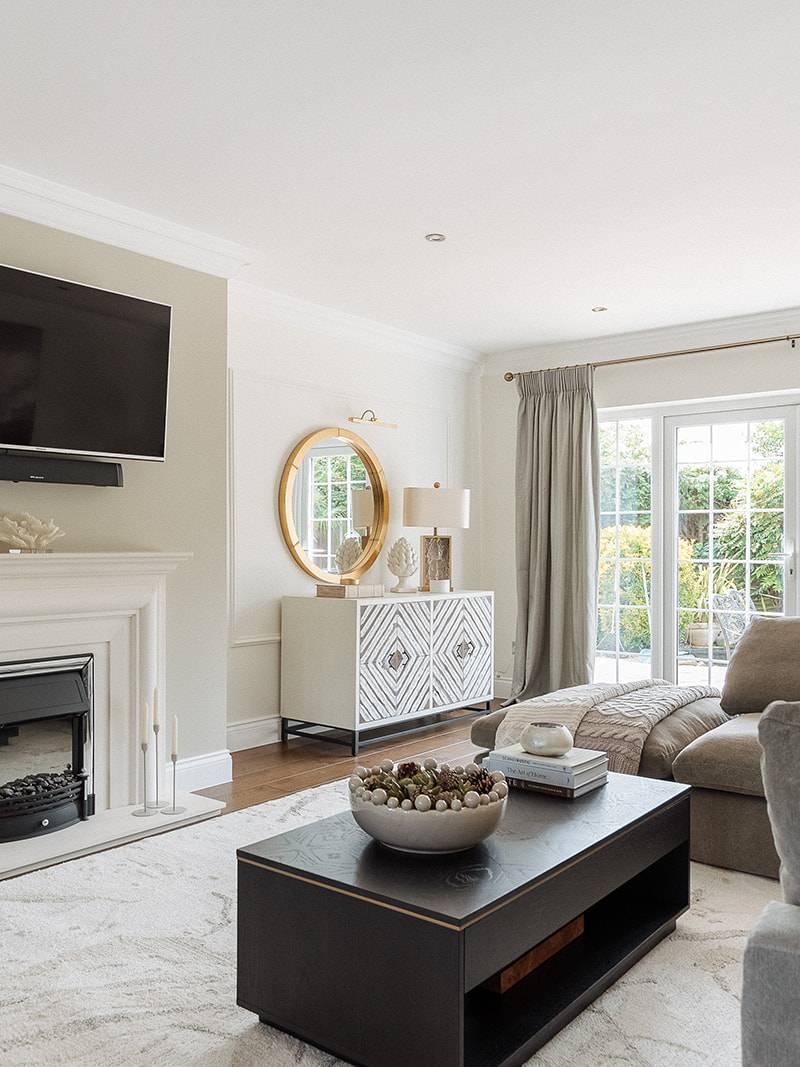
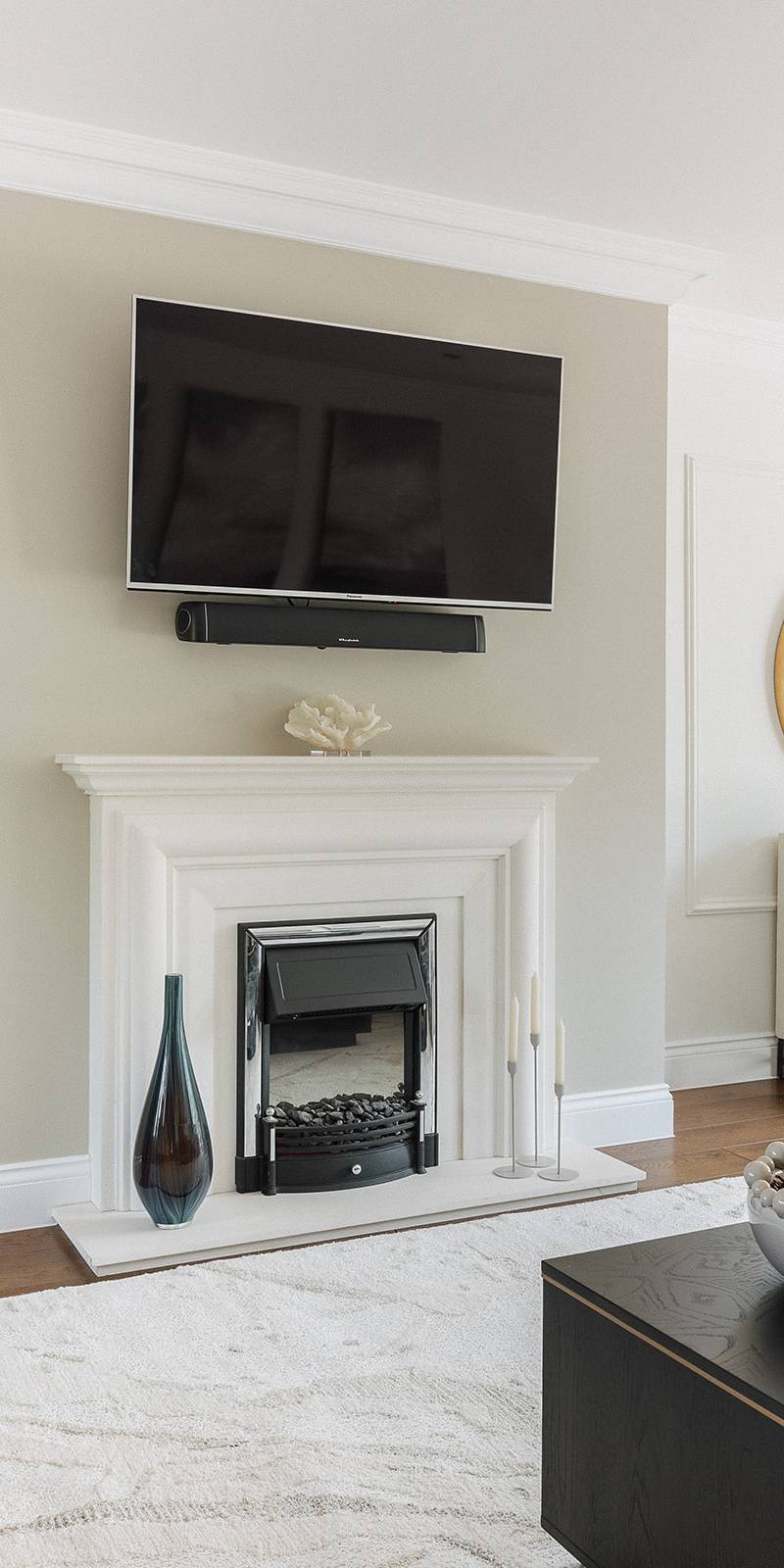


See the full project: Witham Interior → · See the full project: Witham Bedroom → · See the full project: Witham Project →
The full Tone service range
More across Essex
Frequently asked
Why does interior design in Witham require a different approach?
Witham’s housing stock—Victorian terraces, interwar semis, contemporary conversions—has established character and proportion. Interiors that respect these constraints rather than compete with them feel honest and endure. Residents typically remain in their homes long-term, so design for permanence rather than novelty becomes the priority.
What does the Discovery phase involve?
Discovery is where we understand the building’s existing qualities: ceiling heights, window positions, light at different times of day, existing architectural details, and how you actually live in the space. We take measurements, photographs, and time to observe before proposing any changes.
How do you handle conservation area constraints?
Conservation restrictions are clarifying rather than limiting. They mean your interior must achieve its character and function through depth, material choice, and spatial planning rather than external alteration. This produces stronger, more thoughtful interiors.
Why do your projects take longer than other designers?
We specify materials in situ, present joinery at full scale, and confirm finishes under your actual light conditions. We do not use digital renderings to collapse the decision-making process. This transparency takes time but it builds certainty and prevents costly revisions during installation.
What materials do you typically specify?
Solid timber, lime plaster, wool and linen fabrics, brass and steel hardware, and other materials that improve with age rather than deteriorate. We avoid materials chosen for their short-term visual impact or low cost, as these tend to require replacement within a decade.
Walk YOUR home with Manong before a single thing is specified.
The Discovery is the first stage of every Tone Commission: a structured meeting at YOUR property or at the studio, where Manong walks YOUR brief with you and tells you plainly what she would do with the space. She is the designer on every Commission she takes, and the work is never handed to a junior. The Discovery is a paid stage, credited in full against the design fee if you both decide to go on, so YOU find out what YOU are dealing with either way.
Request a Discovery