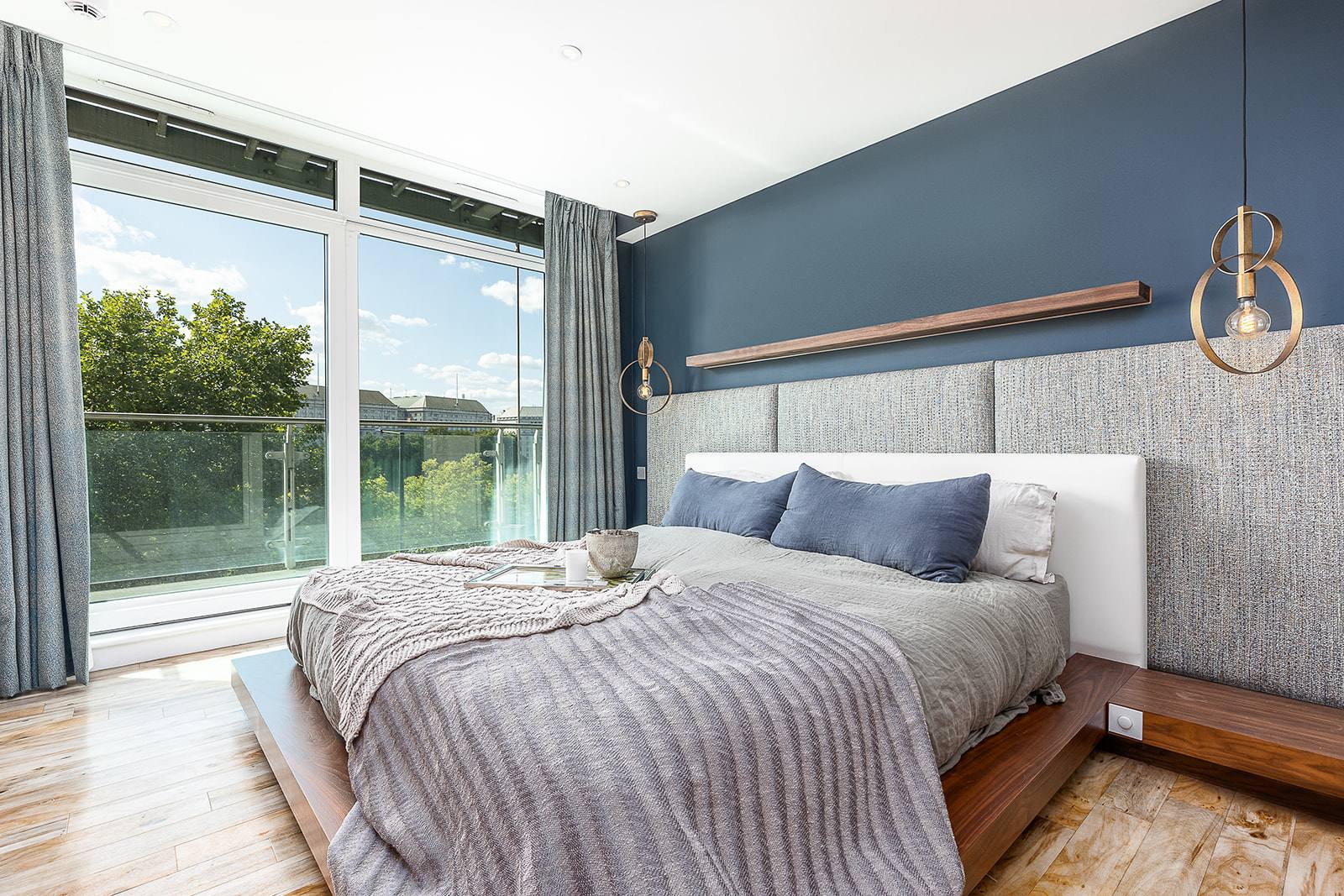
An accent wall works when it echoes something true about how you use the room and reflects the quality of light at different times of day. The wall you choose should sit where your eye naturally lands when you enter, not fight the room's traffic or the way furniture sits. Colour alone does not make it work; proportion, placement and restraint do.
What an accent wall actually does
An accent wall is not decoration. It is a design decision that changes how light moves through a room and where attention settles. When it is right, you do not notice it is there until someone asks why the room feels composed. When it is wrong, it looks like a wall that got a different colour by accident.
The wall works because of three things: it catches light differently from the other walls, it sits where your eye naturally rests when you step in, and it does not fight the furniture or the room's shape. A wall directly opposite a window reflects that light back into the room. A wall where a sofa faces it becomes the backdrop that matters most. A wall in shadow can hold a darker tone without closing the space.
Where most people place an accent wall, and why it fails
The mistake is treating an accent wall like a piece of art that should hang somewhere obvious. People choose the wall they face when they sit down, or the largest wall in the room, or the wall behind the bed because that is where an accent wall is meant to go in a magazine. None of those reasons are about how light moves or how you actually live in the room.
You lose months of living in a room that looks unfinished because the accent wall sits where it pulls your eye away from the furniture, or where the light makes it look dull at midday and too dark at evening. By the time you realise it is wrong, you have already committed to it, and repainting costs time and money.
How light and traffic tell you which wall to choose
Walk into the room at three different times of day: morning, midday and evening. Notice which wall catches light and which sits in shadow. Notice where you naturally look when you enter. Notice which wall is behind you when you sit in the place you sit most often. That is the wall that matters.
The wall you choose should be one that light touches during the hours you use the room most. If the room is a bedroom, the wall you face when you wake matters. If it is a living room, the wall your eye lands on when you enter from the hall is the one that sets the mood for the whole space. Colour deepens or lightens depending on how much light it receives, so a tone that works in morning light may look flat by evening if it sits in shadow.
Why colour alone does not make an accent wall work
The colour you choose for the accent wall must sit in conversation with every other surface in the room: the floor, the ceiling, the furniture, the light fittings and the trim. A colour that is true on a paint chip looks different on four metres of wall, different again when light moves across it, and entirely different if the furniture in front of it competes for attention.
At London Embankment Apartment, the accent wall colour was chosen because it echoed the undertone in the stone floor and held the light that bounced off the river in the afternoon. The same colour in a room with a dark carpet and north-facing windows would look cold and heavy. The colour works because it works with everything else in the room, not against it.
How the discovery phase tells you whether an accent wall is the answer
The only way to know whether an accent wall is the right move is to see the room properly: measure it, understand which walls catch light, notice the furniture and how it sits, and talk about how you use the space. This is the Discovery phase, and it matters more than the colour choice itself. Most people skip this and go straight to paint swatches, which is why accent walls fail.
When we worked on the Bexleyheath house, the clients wanted an accent wall in the four-storey staircase. What made the difference was understanding that the staircase is lit from skylights above and from windows on one side only. The wall I chose catches that light all the way up. A different wall would have sat in shadow and pulled the eye down instead of up the stairs.
The next step: see what your walls can do
An accent wall is only as good as the thinking behind it. Before you choose a colour or commit to a wall, you need to see the room as a whole: how light moves, where your eye naturally lands, what the space actually says about how you live in it. That is what matters.
If your home no longer matches who you have become, or a room feels like it is missing something but you cannot name it, the answer might be an accent wall. It might also be something else entirely. The only way to know is to talk it through with someone who listens to how you use the space, not someone who knows where accent walls are supposed to go.