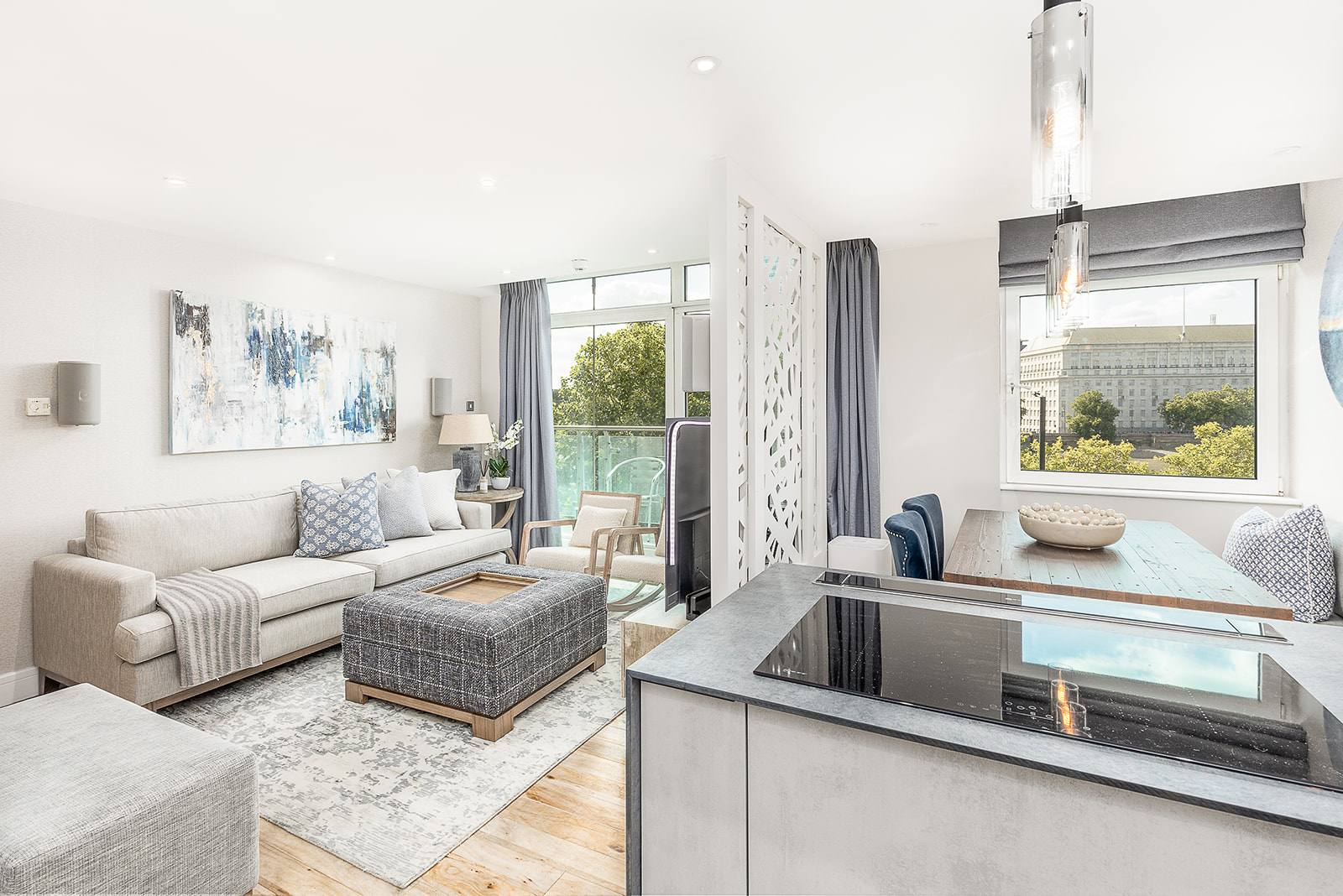
Designing a room starts with understanding how you use it, not how it should look. A room design that works listens to your vision, fits your daily routines, and holds its beauty long after the work is finished. Tone Interiors begins with Discovery, moves through Concept, Design & Specification, then Commission and Reveal, keeping you involved at every stage.
What does it mean to design a room?
Designing a room is not about picking colours and furniture. It is about understanding how you move through the space, what you do there, how natural light falls through the windows, where heat and cold gather, and what the room needs to do for your life. A room design that works fits your schedule, your family, your business. It does not make you fight it. It does not waste space. It does not cost more than it has to, because the thinking happens before the work starts.
This is why Tone Interiors begins with Discovery. You talk through how the room fits into the rest of your home or business, what works now, what does not, what you see yourself doing in this room five years from now. That conversation becomes the basis for everything that follows. No copy and paste. No design that suits someone else and only sounds good when you hear it described.
Why most room designs never really work
A room design arrives, and it looks good in the renderings. But once you are living in it or working in it, you find yourself walking around furniture, or the light is wrong at the time of day you use it most, or two trades show up at the same time because nobody coordinated them. You keep paying for fixes. You live with compromises. The trades blame each other. The designer is hard to reach. A year later, you are still managing calls about a project that was meant to be finished.
What you lose in that time is peace. You lose evenings and weekends. You lose the confidence that someone is actually in charge. By the time you find a better way, months have slipped past and the room is still not what you imagined when you started.
How Tone Interiors designs a room from start to finish
The room design process at Tone Interiors runs through five stages: Discovery, Concept, Design & Specification, Commission, and Reveal. In Discovery, you and Manong talk through your vision for the room, how you use the space, what matters to you, and where the gaps are. Nothing is ruled in or out. This is where the real design work begins, because the design that follows will be built on what you have said, not on what Manong thinks you should have.
From that conversation, Manong develops a Concept that reflects your words back to you as a visual idea. Once you approve the Concept, the Concept, Design & Specification stage locks in every material, every colour, every measurement, every trade instruction, so that when Commission starts, nobody wastes time guessing. The work goes to plan. Trades know exactly what is expected. By the time you reach Reveal, the room is finished to the standard Manong is happy to deliver.
You are part of every step. There is no surprise reveal because you have signed off on the design before a single tradesperson arrives. You know what you are getting, and you know when it will be finished.
What changes when a room is designed to fit your life
Once the room is finished, you notice it first. You move through it and nothing is in the way. The light is right. The traffic flow works. Everything is where it needs to be. Then other people notice. Your family or your team comments that the space feels different, feels right. A client walking into a commercial space sees the detail and assumes the business behind it has its act together. A guest in a restaurant feels seated comfortably, notices the thought that went into it, comes back.
But the real change is quieter. You stop managing the project. The work is done. The room does its job. You get your time back.
The room design that holds its value
A room designed without listening to how you live becomes dated or uncomfortable or both. A room designed to fit your vision and your life lasts. The finishes wear well because they were chosen for use, not for trend. The layout stays sensible because it was built on how you actually move through the space. If you sell, a property where the interior was designed to this standard commands a premium, because the next owner sees immediately that someone knew what they were doing.
This is why Manong works with property investors managing multiple acquisitions as much as with families transforming a single home. A room designed well is an investment that pays back in use and in value.
Does your room match who you have become?
If your room no longer fits your life, or if you are moving into a space that needs to work for you from day one, the first step is a conversation. Manong will ask you about the room, about how you use it, about what matters. From that conversation, you will know whether a full room design is right, or whether a smaller intervention will do. Either way, you will walk away knowing what the work would look like and what it would cost.