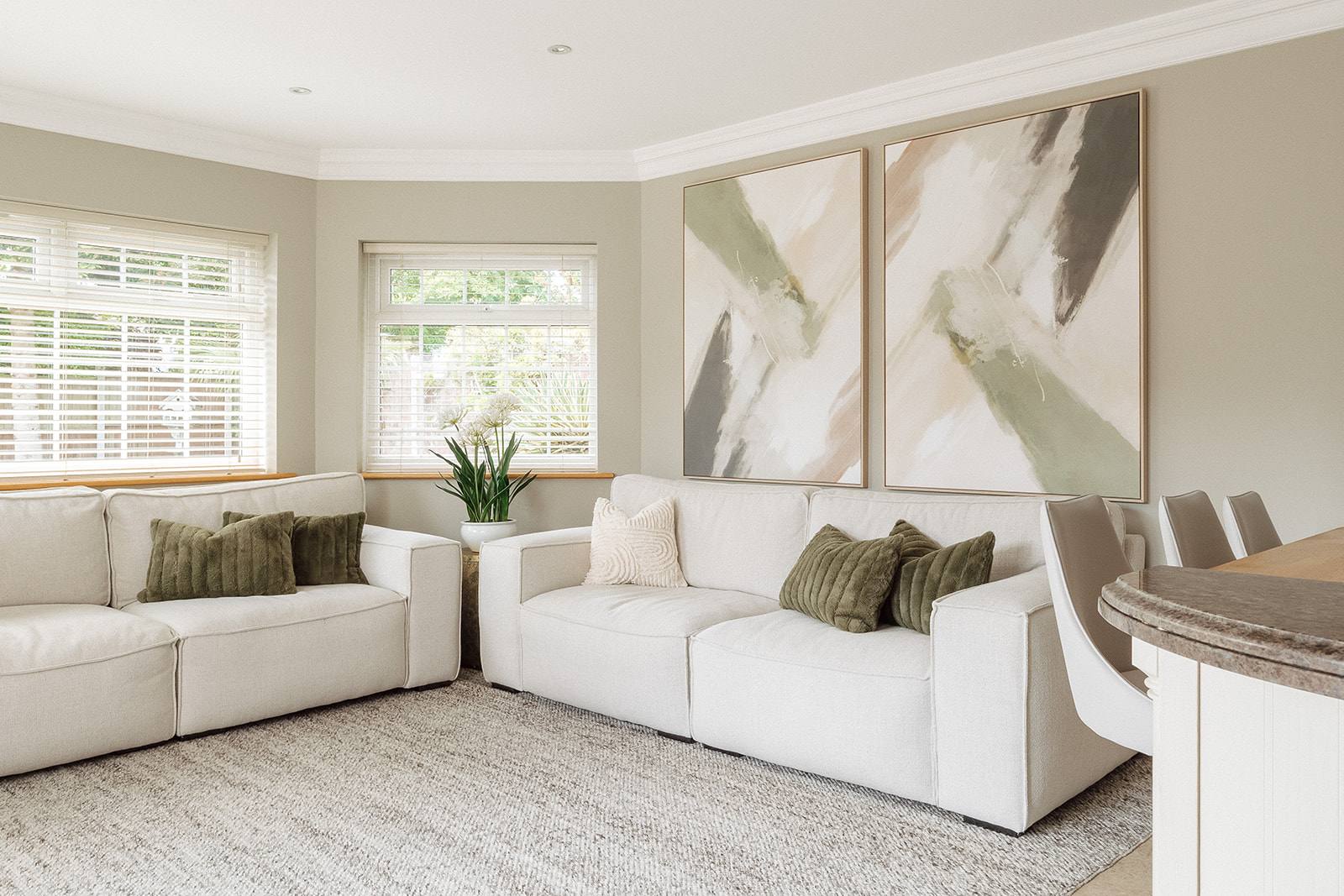
Nature in interior design means working with material honesty, light, and spatial proportion—not decoration. The studio approaches it through Discovery conversations about how a space will be lived in, then Concept work that identifies where natural materials and light will do the most work. The process ensures the finished interior will look and feel as intentional in three years as it does on Reveal day.
What does ‘nature in interior design’ actually mean in practice?
Nature in interior design is not about adding plants or nature-themed prints. It refers to the deliberate use of natural materials, daylight, spatial proportion, and tactile surfaces that age and patina over time. These elements create interiors that feel permanent and considered rather than trend-led or cosmetic. The distinction matters: a reupholstered sofa keeps its original frame and structure; a wall in natural plaster or lime develops character as it matures. These choices are technical and material, not decorative.
The studio’s approach is grounded in how a space will actually function. At Beaulieu Dental Practice, the material palette was chosen to support both clinical rigour and human comfort. The materials had to perform under intensive use, age gracefully, and reinforce the practice’s commitment to care. At Fruittii Hair Salon, the brief required materials that could withstand water exposure, frequent cleaning, and high footfall, while still conveying warmth and craft. In both cases, nature entered through specification, not styling.
How does the Discovery stage shape material and light decisions?
Discovery is the stage where the studio listens. It is not a sales conversation. The team asks how the space will be used daily, who will inhabit it, what light falls where, how the building moves with seasons, and what materials will need to perform. These answers determine whether natural stone, timber, plaster, or other materials are genuinely right for the project—or whether they would be a poor fit masquerading as aesthetic choice. A material chosen for beauty alone, without understanding the humidity, traffic, or light exposure it will face, will look forced and fail faster.
At Keystones Estate Agent in London, Discovery conversations revealed that the space needed to feel both professional and welcoming, with high client turnover and constant activity. The brief required materials that would support that energy without looking corporate or cold. At the London Embankment Apartment, Discovery established how the residents would move through the space, how northern light would behave across the day, and what materials would complement the existing architecture. These insights, not mood boards, shaped the Concept stage.
What happens in the Concept, Design & Specification stage to anchor natural elements?
Concept, Design & Specification is where material decisions are made with precision. This is not where trends are applied; it is where every material, finish, and light source is chosen because it solves a real spatial or functional problem. The studio specifies materials by their performance characteristics, origin, and how they will age. A timber floor is not chosen because ‘wood looks warm’; it is chosen because its thermal mass, acoustic properties, and durability match the building’s context and the occupant’s need. Plaster is specified for its ability to breathe, regulate humidity, and develop subtle variations that prevent interiors from feeling static.
At Tone at Canary Wharf, the brief required a commercial interior that felt substantial and human-scaled despite the building’s scale. The Concept, Design & Specification stage established a palette of natural stone, timber, and raw materials that would anchor the space and create clarity of function across the floor. The materials were chosen to support the acoustic environment, the flow of movement, and the visual weight needed to balance glazing and openness. At the Witham Project, specification work focused on how materials would interact with the building’s existing character and how new insertions would read as intentional rather than imposed.
How does natural light become part of the material strategy?
Light is a material in itself. The studio does not treat lighting as a separate service or an afterthought; it is integrated into the spatial strategy during Concept, Design & Specification. Natural daylight shapes material choices: a plaster finish reveals itself differently under north light than under south light; timber grain reads differently as seasons shift the sun’s angle; stone surfaces move between warm and cool depending on the time of day. When artificial light is needed, it is specified to complement, not replace, these natural cycles. This requires an understanding of the building’s orientation, glazing performance, and how occupants actually move through and use the space.
The London Embankment Apartment is north-facing, a constraint that shaped the entire material and finish strategy. Rather than fighting the light condition, the Concept, Design & Specification stage used it to anchor the palette in materials that benefit from that quality of light: cooler plasters, matte finishes, and timber species that read as silvered rather than golden. At Keystones Estate Agent, the abundance of glazing required materials that could read clearly in bright, variable light without becoming visually chaotic. The specification was as much about what would be calm and ordered under those conditions as it was about material beauty in isolation.
What role does material aging play in a nature-led interior?
An interior that truly draws from nature must be designed to age. This is where quiet luxury and restraint converge: a well-specified interior should look intentional and grounded not only on Reveal day, but in year two, year five, and beyond. Natural materials patina, darken, and develop character. Timber weathers; plaster develops subtle colour variation; stone takes on the polish of use. These changes are not failures; they are evidence of the material doing its job and the interior becoming deeper. The studio approaches this by specifying materials honestly, understanding their performance over time, and ensuring that maintenance and cleaning preserve, rather than fight against, this natural process.
This philosophy appears across all project scales. At Beaulieu Dental Practice and Fruittii Hair Salon, specification included guidance on how materials would be maintained—not to restore them to pristine newness, but to keep them functioning and looking considered as they age. At the Witham Project, the choice of materials was partly made because the occupants would live with them long-term, and the material would develop patina that deepened rather than degraded the interior’s character. This is the difference between designing for a photograph and designing for a life.
How does the Reveal stage confirm that nature-led choices have worked?
Reveal is the moment when the design becomes inhabited. It is the proof that Discovery conversations were listened to, Concept, Design & Specification was rigorous, and Commission work was executed with care. A nature-led interior should feel complete and already lived-in on Reveal day—not precious, not staged, not requiring constant curation. If the material palette feels strained, the light awkward, or the space demanding rather than generous, the issue usually traces back to a choice made during Concept, Design & Specification without sufficient grounding in how the space would actually be used.
The studio’s process is built so that Reveal confirms decisions made months earlier. This requires rigour and restraint throughout. It means turning down trend-led suggestions, resisting the impulse to add ‘more’, and trusting that a considered material palette and clear spatial organisation will outlast any brief moment of aesthetic fashion. The finished interiors at Keystones Estate Agent, Tone at Canary Wharf, the London Embankment Apartment, and the Witham Project are all interiors that were designed to be inhabited, not displayed—and that is where their permanence comes from.