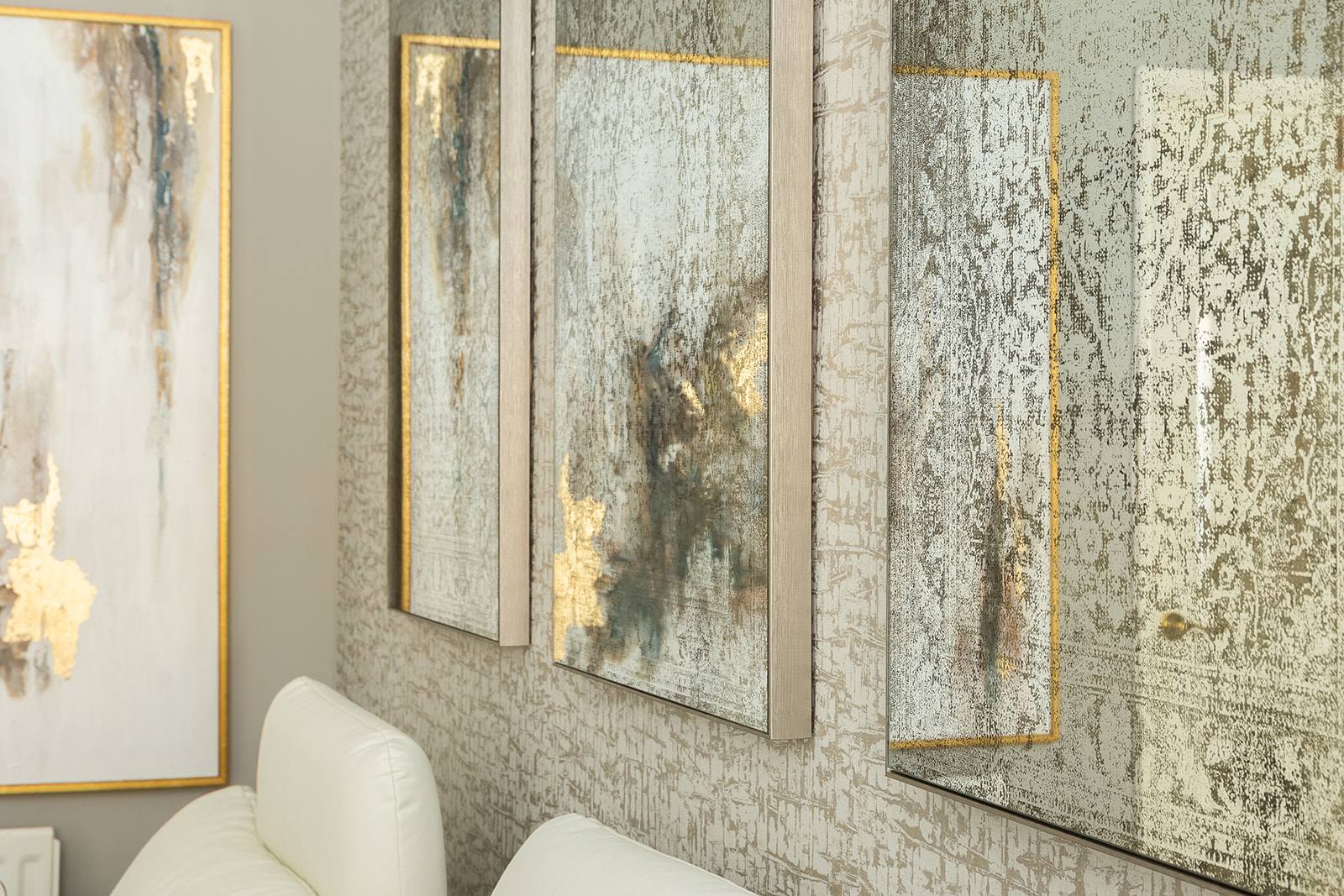
Authentic nature interior design prioritises material honesty, spatial restraint and permanence over aesthetic trend. The distinction lies not in decoration but in how a studio sources, specifies and applies natural materials during Discovery, Concept, Design & Specification, Commission and Reveal—and whether those choices remain legible and valuable ten years on.
What do we mean by nature interior design?
Nature interior design is rooted in the deliberate use of authentic, often unfinished or minimally processed materials—timber, stone, clay, textiles from natural fibres—combined with spatial restraint and an absence of applied ornament. It is not decoration with a nature theme. Instead, it is an approach grounded in the material's own character: the grain of oak, the patina of limestone, the weight and drape of linen. The philosophy extends to how light interacts with surface, how a material weathers over time, and whether its presence supports the space's purpose rather than competing for attention.
This approach differs fundamentally from trend-led 'biophilic' design, which often imports nature-inspired imagery or colours into conventional commercial or residential schemes. Authentic nature interiors instead embed the material and spatial logic into the building's structure and daily use. A reupholstered sofa keeps its original frame; a wall finished in lime plaster is left to develop its own surface variation; stone floors are laid in patterns that reflect their thickness and the hand labour involved.
The studio's commercial projects—Beaulieu Dental Practice, Fruittii Hair Salon, Keystones Estate Agent and Tone at Canary Wharf—and residential work including London Embankment Apartment and Witham Project all demonstrate this logic: material choices are justified by function, durability and the occupant's sensory experience, not by visual trend or marketing narrative.
How does a studio discover whether materials are authentic or applied?
During Discovery, a competent interior studio interrogates the building's existing fabric, the client's long-term use pattern, and the climate and light conditions of each space. This stage determines which materials can perform honestly—whether a stone floor will weather acceptably, whether timber will move visibly with humidity, whether plaster will develop character or merely show damage. The studio should ask: Does this material serve the space's function? Will its appearance improve or degrade? Is the finish reversible if taste or need changes?
This investigative phase often reveals that fewer, higher-integrity materials perform better than a palette of disparate choices. A commercial practice like Beaulieu Dental Practice benefits from materials that can withstand daily hygiene demands whilst remaining tactile and visually restful. A residential space like Witham Project demands materials that will develop a patina—gaining beauty through use rather than suffering decline. The studio should be transparent about which materials will change, how, and over what timeframe.
What role does Concept, Design & Specification play in material authenticity?
After Discovery, the Concept phase establishes the spatial and material logic: which materials will dominate, which will recede, and how the palette will support both function and permanence. This is where a studio's restraint becomes visible. A nature-led interior typically reduces the number of material types rather than expanding them; the Keystones Estate Agent project, for instance, relies on a coherent palette of timber, plaster and stone rather than mixing commercial finishes. The Concept must articulate why each material is present, not merely where it will appear.
Concept, Design & Specification then moves into detail: the exact grade and finish of timber, the thickness of stone, the composition of plaster, the fibre content of textiles, and the fixing methods that will allow materials to move and weather without failure. This specification stage is where authenticity is either embedded or compromised. A studio that specifies standard commercial paint over plaster rather than lime-based finishes, or veneered board rather than solid timber frames, is optimising for cost or speed, not material permanence. The specification document should be legible to contractors and clients alike—a public commitment to the materials chosen.
How do Commission and Reveal demonstrate lasting quality?
During Commission, the studio oversees the sourcing and installation of specified materials. This stage reveals whether the Concept can be realised: whether the timber merchant has stock of the right grade, whether the mason can lay stone to the specification's tolerances, whether the plasterer understands the finish required. A studio working on residential projects like London Embankment Apartment must hold both contractor and supply chain accountable to the documented specification, not merely to cost or schedule.
Reveal—the completion and handover of the interior—is the moment at which the material choices become apparent to the occupant. A poorly specified or installed nature interior will show defects immediately: patchy plaster, timber that splits, stone that stains. A well-executed scheme will demonstrate its longevity from the first day: surfaces that invite touch, materials that respond to light, finishes that will evolve gracefully. The studio should document the Reveal condition as a baseline, allowing the client to distinguish between acceptable material development and genuine failure over time.
What questions should a prospective client ask about material sourcing?
When interviewing a studio for a nature-led interior, ask: Where will materials be sourced? Can the studio name the supplier, timber grade, stone type and plaster composition? How will materials be tested—on-site samples, mock-ups, site visits to supplier? What is the studio's relationship with contractors who understand natural materials? How does the specification document describe finish, fixing and expected weathering?
A studio confident in its material knowledge will answer these questions with specificity and without defensiveness. It will show precedent work—commercial projects like Tone at Canary Wharf or residential schemes like Witham Project—where materials have been in use long enough to demonstrate their performance. It will not promise a fixed appearance ('this wood will never change') but will instead describe how the material will evolve and why that evolution is desirable. Ask to visit a completed project at least two years old, where you can see how natural materials have actually aged in the client's care.
Why does restraint matter more than material variety?
A common misconception is that nature interior design requires many different materials—wood, stone, clay, natural fibres—all present simultaneously. In practice, the strongest nature-led interiors achieve their presence through depth within a limited palette rather than breadth across many. A wall of lime plaster, a timber floor, linen upholstery and daylight are often more powerful than a scheme combining six materials of competing character. The studio's task during Concept, Design & Specification is to determine which materials are structural to the space's logic and which are surplus.
This restraint serves two functions. First, it allows each material to be specified and installed with rigour—the plasterer has time to develop the plaster finish, the carpenter to select and finish timber, the mason to set stone carefully. Second, it makes the interior legible: the occupant can understand why each surface is present and how it contributes to the space's function and beauty. A commercial space like Fruittii Hair Salon demonstrates this principle—a focused material palette supports both the work being done and the sensory experience of the client. Restraint is not poverty of idea; it is the discipline required to make each choice permanent.