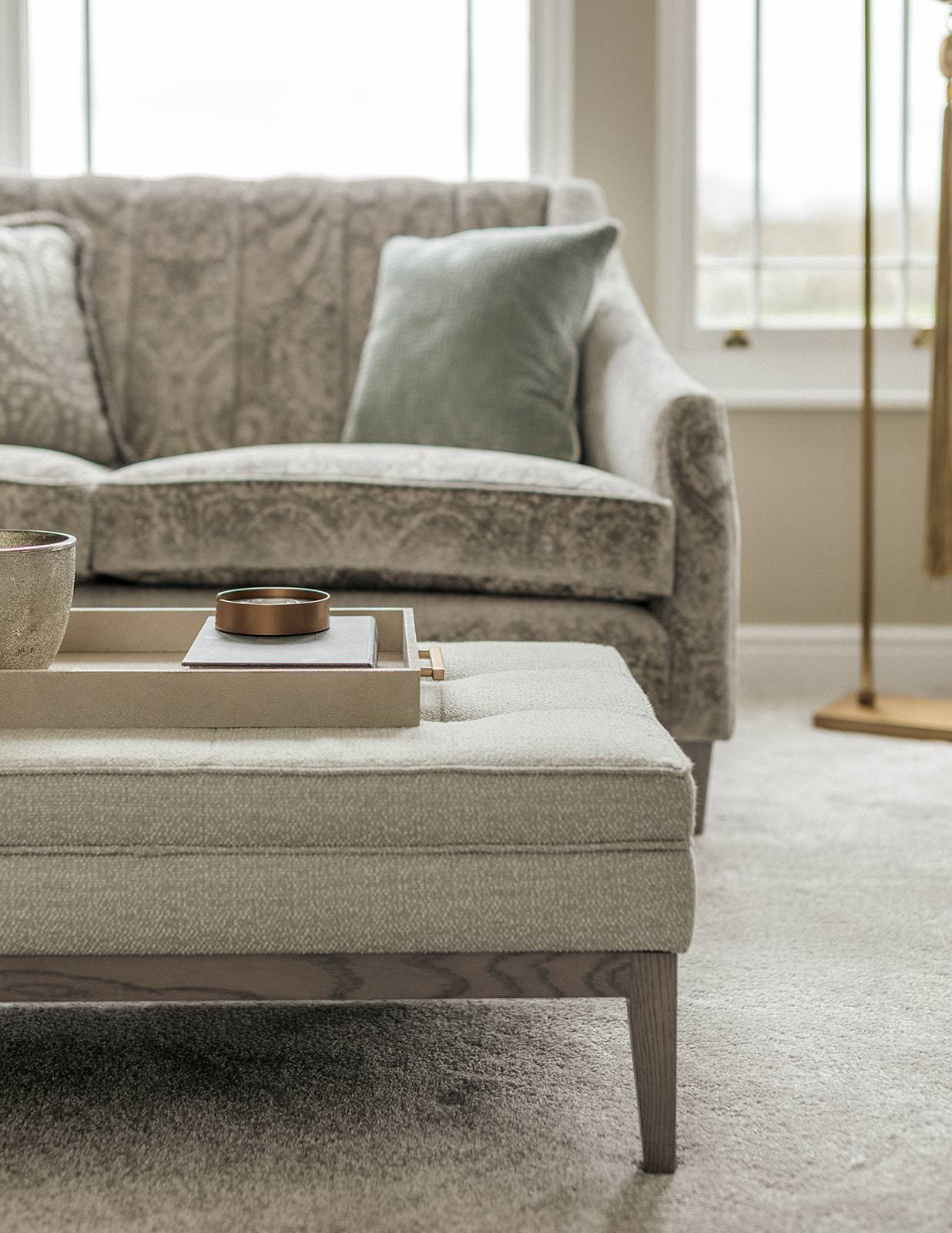
The five C’s of sustainability in interior design are: Choice (selecting durable, honest materials), Composition (understanding what things are made of), Craft (quality construction that endures), Consequence (considering lifespan and waste), and Custodianship (designing spaces meant to last generations, not seasons). These principles reject trend-led replacement in favour of interiors built for permanence.
Why does material choice matter more than you think
When we specify materials for a commercial or residential project, we are committing to a choice that will outlive marketing cycles. At Keystones Estate Agent in London, the brief demanded a professional environment that would retain credibility across shifting market conditions. The studio selected finishes—timber joinery, neutral upholstery, solid surfaces—chosen not for novelty but for their ability to age honestly and remain appropriate regardless of surface-level aesthetic shifts. This is Choice: the deliberate selection of materials that will look considered in five years, not dated.
Choice begins in Discovery. Understanding the actual use—foot traffic, light exposure, maintenance reality—determines whether a material will genuinely perform or require replacement within years. A reupholstered sofa keeps its original frame when the fabric choice reflects real wear patterns and durability, not visual trend. The London Embankment Apartment demonstrates this: specification favoured materials with proven longevity, materials that develop patina rather than deteriorate.
What does composition mean in sustainable interior specification
Composition is the honest accounting of what something is made from. Too often, materials are specified by appearance alone, hiding poor manufacture or single-use components beneath a surface finish. In Concept, Design & Specification, the studio insists on understanding material constitution: Is the upholstery wool or polyester? Is the timber solid or veneer? Is the adhesive water-based or chemical-heavy? At Fruittii Hair Salon, specification required materials that could withstand humidity and frequent cleaning without off-gassing or degrading. Composition—knowing exactly what was specified—meant the salon could be maintained and refreshed without wholesale replacement.
Composition also governs repairability. A sofa whose frame is hardwood and whose joints are traditional mortise-and-tenon can be reupholstered indefinitely. A sofa glued and stapled with veneered particleboard cannot. This is not aesthetic preference; it is specification discipline. When a prospective client asks whether an interior will last, the honest answer lies in Composition: the materials and methods chosen during Concept, Design & Specification.
How does craft quality affect the life of an interior
Craft is the execution that transforms specification into reality. A perfectly specified joinery detail executed poorly will fail within years. At Beaulieu Dental Practice, commercial specification demanded joinery, cabinetry and custom elements built to withstand constant use by multiple users, daily cleaning, and the specific stresses of a clinical environment. The Commission phase ensured craftspeople understood not just the design intent but the functional reality: handles would be grasped hundreds of times weekly; surfaces would be sanitised; precision alignment was non-negotiable. This is Craft: the discipline of making things correctly so they remain functional and composed.
Craft-led interiors age differently from assembly-line alternatives. A well-jointed timber cabinet develops a subtle patina; its joints remain tight. A poorly constructed one shows gaps, warping, and loose connections within months. The Witham Project shows residential interiors where handmade elements—custom cabinetry, fitted joinery—have become more valuable, not less, as they have aged. Craft is sustainability in practice.
What is the consequence of design choices over time
Consequence means accepting responsibility for what happens to an interior after the Reveal. Every specification choice carries a hidden consequence: Does this material end in landfill or can it be composted, recycled, or reused? Will this finish require replacement in three years or thirty? Does this design encourage disposal or adaptation? At Tone at Canary Wharf, commercial specification prioritised materials and finishes that could be refreshed without structural replacement—meaning that if colour or texture preferences evolved, the underlying bones would remain sound and reusable.
Consequence also governs maintenance burden. A high-gloss finish in a high-traffic commercial space has consequences: frequent re-polishing, eventual deterioration under wear, replacement cycles. A matte, naturally-textured material has different consequences: it hides marks, develops character, and may outlive glossy alternatives with less intervention. Sustainable interiors are designed with honest understanding of what will actually happen to them: how they will be used, maintained, eventually refreshed or retired. The studio works in full consequence awareness, not optimistic hope.
Why custodianship is the foundation of lasting design
Custodianship is the principle that an interior belongs to a succession of users, not a single owner or moment. A well-designed space should be adaptable: it should permit refreshing without demolition, repair without replacement, and evolution without fundamental redesign. This is embedded in the studio’s approach from Discovery onwards. Understanding how a space will actually be inhabited—by whom, how it will change, what future uses might emerge—determines whether specification allows for custodianship or enforces obsolescence.
The residential and commercial projects in the studio’s portfolio share this principle: they are designed to belong to their next custodian, not just their first. The London Embankment Apartment and Keystones Estate Agent were specified with the understanding that tastes, families, and businesses evolve, but the underlying structure and key materials would remain valuable. Custodianship rejects the idea that interiors are consumable. It treats spaces as inheritances: well-built, honestly detailed, and resilient enough to welcome new use without wholesale replacement.
How to apply the five C’s when commissioning your own interior
When evaluating a design proposal or brief, use the five C’s as a test: Can you name the actual materials and their composition? Has the design been conceived around craft execution and joint detail, or just visual appearance? What are the honest consequences of the specification choices—in maintenance, replacement cycles, and eventual disposal? Does the design assume you are its only custodian, or does it permit adaptation for someone else?
The studio’s process—Discovery, Concept, Design & Specification, Commission, Reveal—is structured to embed these five principles throughout. In Discovery, we ask: What will actually happen in this space? In Concept, Design & Specification, we answer: through material choice, composition clarity, craft-led detailing, consequence awareness, and custodianship thinking. By Reveal, the interior is not a finished statement but a durable foundation for the years and users to come. These five C’s are not additive environmental gestures; they are the discipline of specification itself.